Shaping faith, fashioning splendour
How theological content is conveyed through fabrics and clothing is the subject of this issue of "Alpha and Omega".
Clothes make the man – and sometimes also tell us something about people’s faith. This is the subject of a large fashion exhibition in the Diocesan Museum in Rottenburg am Neckar – and in the next issue of “Alpha & Omega – Church in conversation”.
Magnificent vestments of saints can be admired in many pictures. Museum director Melanie Prange reports on how theological content is conveyed through these fabrics and how textiles make the sacred tangible, so to speak.
In cooperation with the Pforzheim University of Applied Sciences, fashion students also designed their own collections and liturgical vestments of the future for the exhibition. It becomes clear that religion and fashion have a lot in common, as Pforzheim professor Sybille Klose explains in the programme.
Watch the programme
The programme “Shaping Faith – Fashioning Splendour” produced by KiP-TV was first broadcast on 30 April 2022. You can find this and other episodes of “Alpha and Omega” on the YouTube Diocesan Museum Channel.
Talking about sacred art and textile messages: Prof. Sybille Klose from the Pforzheim Faculty of Design, Dr Melanie Prange, director of the Rottenburg Diocesan Museum, and presenter Christian Turrey.
Picture: KiP-TV

9. Rottenburger Kulturnacht
Wach bleiben!
Melden Sie sich direkt an:
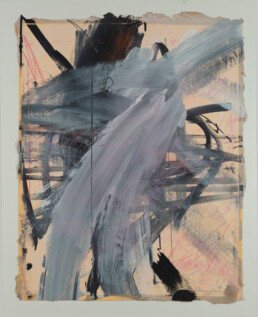
Finissage | »To Know A Form, You Have To Work It«
Artist: Frederick D. Bunsen
Speaker: Prof. Dr. Dirk Baecker, Chair of Cultural Theory and Management, Witten/Herdecke University.
You can watch a recording of the online finissage here directly on our site or on the Youtube channel of the Diocesan Museum Rottenburg.
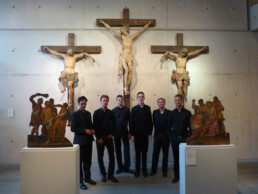
"Ante saecula" - Liturgical music from the early Middle Ages
On the occasion of the finissage of the exhibition “In our Soil. Grave finds of the Early Middle Ages in the Southwest“, the Schola Cantorum at the Institute of Musicology at the University of Tübingen, under the direction of Prof. Dr. Stefan Morent, will present a short programme in a livestream, which was originally intended as a musical accompaniment to the opening of the exhibition.
Although no direct written musical tradition has survived from the time of the excavation finds from the early Middle Ages, the process of incipient Christianisation quickly led to the establishment of religious centres in the German southwest as well, such as the island monastery of Reichenau in Lake Constance or the monastery of St. Gall. These monasteries also provided some of the earliest musical sources for liturgical chant, the so-called Gregorian chant, which shaped and structured both the celebration of Mass and the Liturgy of the Hours.
The contact surfaces between pagan traditions and Christianisation are reflected in the “Song of George”, which in Old High German shows the model of the heroic epic, but reworks it in Christian terms. It probably did not originate on the Reichenau, but corresponds with the veneration of the saint there.
Finally, the Christmas sequence by Notker Balbulus, the “Stammler”, who worked there as an eloquent poet-musician in the later 9th century, leads to St. Gall.
Artists
Schola Cantorum
at the Musicological Institute of the University of Tübingen
Conductor: Prof. Dr. Stefan Morent
Singers: Michael Braunger, Alexander Goossenns, Stefan Morent, Samuel Schick, Tilo Schmid-Sehl, Janis Tortora
Programme
- Introitus Statuit ei dominus
- Kyrie in summis
- Georgslied
- Alleluia Dies sanctificatus
- Notker Balbulus (840–912): Sequence Natus ante saecula
(all transcriptions and arrangements from the medieval manuscripts by Stefan Morent).
Registration is not required.
You can watch a recording of the online finissage here directly on our site or on the Youtube channel of the diocesan museum Rottenburg.
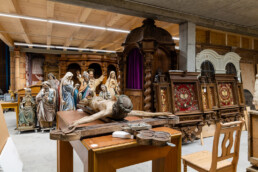
Digital Reichenau Artists' Days
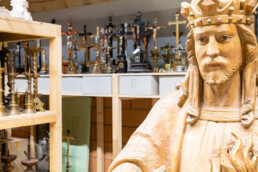
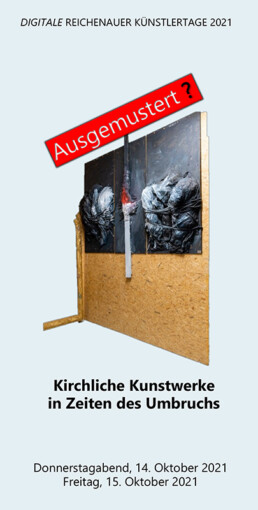
The upheavals in the Church are not only changing pastoral work on a broad scale. These changes are accompanied by the fact that liturgical places are increasingly being abandoned and sacred furnishings are ‘suddenly’ on the doorstep of diocesan depots. It is true that the past has also repeatedly led to parishes ‘having something to give away’. However, the potential abundance of expected “donations” now increasingly confronts dioceses with the question of what is preserved, what criteria are followed for storage and collection, and how to communicate what happens to the objects that cannot be deposited. Those responsible in the Diocese of Rottenburg-Stuttgart are facing up to this discussion. They are doing it together with the Art Association of the Diocese of Rottenburg-Stuttgart and the Society of Christian Artists Freiburg, as both are concerned about the understanding of old and modern art as well as contemporary art in the church space with its possibilities. The Tübingen Chair of Liturgy Prof. Dr. Stefan Winter, art commissioners from other dioceses and artists who are currently contributing through their actions to ensuring that art remains in church spaces and that these spaces are strengthened as a result will provide impulses on the subject. Invited to perceive and discuss are the members of the two associations as well as, in particular, interested parties from the parishes who are touched by the topic or see themselves confronted with it. In order to ensure that the meeting will take place even if the incidence should rise again, it will be held digitally. This format also allows for broader participation.
Thursday, 14.10.2021 (19:30 to 21:00)
Evening lecture
From 19:00 Login
19:30 Welcome
Martin R. Handschuh
19:45 In Change(s). How church furnishings must change, because liturgy is encounter
Prof. Dr. Stephan Winter
20:30 Reflection and discussion
21:00 End
Friday, 15.10.2021 (9:00 to 12:30)
Section 1:
Stored and collected : Characteristics and tasks of diocesan repositories
from 8:30 Login
9:00 Welcome
Martin R. Handschuh
9:10 Impulse
Auxiliary Bishop Dr. Gerhard Schneider
9:20 Short film: The Diocesan Depot in Obermarchtal – an insight
9:30 iconoclasm – liturgical atrophy – profanations on the horizon. The origins of the depot in Obermarchtal
Dr. Thomas Schwieren
Consecrated. Preserved. Forgotten? Tasks, concepts and opportunities of the diocesan depot in the 21st century
Dr. Melanie Prange
10:15 Break
10:30 From Light Candles to Lüpertz
Dr. Maria Baumann
11:00 What do we want to preserve. Between need and tradition
Dr. Anna Pawlik
11:30 Discussion
12:30 Lunch break
Friday, 15.10.2021 (14:00 to 16:30)
Section 2:
Dealing with art today, so that art remains and (church) spaces are strengthened
14:00 Permanently ephemeral.
Media art for the sacred space
Karen Irmer
14:30 Participation and dialogue
The Listener and Other Projects
Sara Opic
15:00 Break
15:15 Staging and Digital Space
Philipp Contag-Lada
15:45 Discussion
16:15 Outlook, thanks, notes and farewells
16:30 End of the conference
Registration via
Archdiocese of Freiburg
Educational Centre Singen
Zelglestr. 4
78224 Singen
07731 982590
info@bildungszentrum-singen.de
https://bildungszentrum-singen.de/
Organisational matters
To participate in the digital annual conference “Reichenauer Künstlertage” 2021, you will need internet access, preferably via a PC or laptop, built-in or external camera and microphone or headset. Experience has shown that participation is most stable with a LAN connection; for WLAN connection, please also ensure a good data connection.
After your registration, you will receive the access links and codes in the week of the conference to the email address with which you registered.
Participation fee
For the participation in the conference we ask the participants to pay the amount of 35,00 €; this will be collected by the Bildungszentrum Singen.
Programme flyer
Foundation Wegzeichen („Signposts“) offers prize
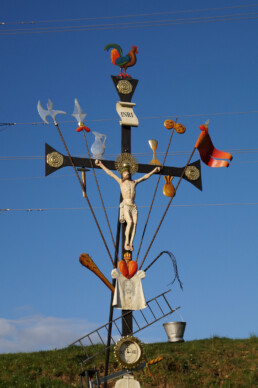
The Foundation Wegzeichen–Lebenszeichen–Glaubenszeichen („Signposts–Signs of life–Signs of faith“) is offering the Foundation Award 2021 for outstanding activities for the preservation, construction or documentation of Christian signs of the way in the Diocese of Rottenburg-Stuttgart.
Prize-worthy activities are, for example:
- Activities to safeguard and preserve a small religious monument
- Restoration and renovation work
- Documentation of small religious monuments on site or in the region
- Questioning the owners of small religious monuments about the history of a small monument, the motivation of the builders, etc.
- Films/videos/sound documents on the subject
- New construction of a small religious monument
The commitment of young people to religious waymarks is rewarded with a special prize. They are called upon, for example, to look into the wayside signs in their locality or to think about erecting a new religious sign.
Individuals, groups or associations can apply for the prize, but not church or political communities or official institutions. The project proposed for the award must have been completed at the time of application (but no longer than 2 years!) and be located on the territory of the Diocese of Rottenburg-Stuttgart. Unfortunately, projects that have already received a funding grant from the Wegzeichen Foundation cannot be considered for an application for the Foundation Award.
You can find detailed information here.
Chapel Talks
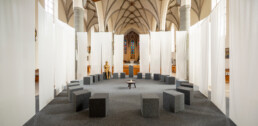
Eckhard Raabe’s chapel talk with Dr Melanie Prange is about the many new online offerings of the Diocesan Museum that were created during the Corona period, as well as the current exhibitions that are now accessible again.
The importance of sacred art in general also comes up – especially with regard to the question of how contemporary art can be integrated into historic church spaces.
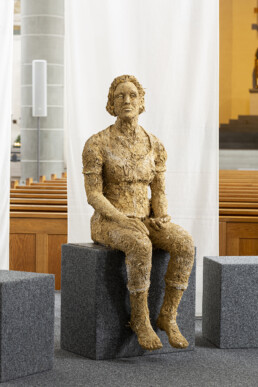
Photo: Sara Opic, “The Listener”, figure made of clay and straw, installation on the occasion of the 500th anniversary of the church of St. Martin in Leutkirch im Allgäu in 2019, (Photos: Heiko Grandel, Augsburg) / http://www.saraopic.com/.
Song Recital - Livestream
"The Soul's Long Journey"
Life tells the most diverse stories. However, the feeling of happiness, love, pain and suffering is common to all. As a listener, consider the lyrical I in songs by Schubert, Schumann, Mahler and others, and accompany it through different life situations, culminating in the God-given arrival in the “Saviour’s dwelling place”, paradise.
Musical arrangement:
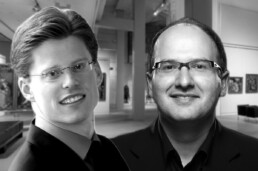
Andreas Großberger, tenor
Jens Wollenschläger, piano
Duration: approx. 45 minutes
Registration is not necessary.
You can find the link to the livestream directly on the Youtube channel of the Diocesan Museum.
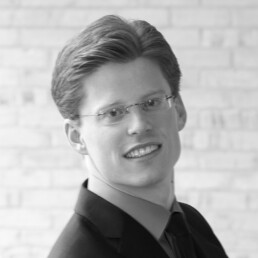
Andreas Großberger, Tenor
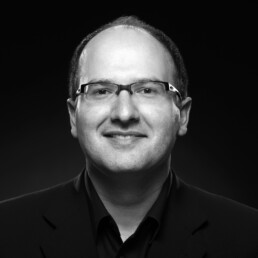
Prof. Jens Wollenschläger, piano
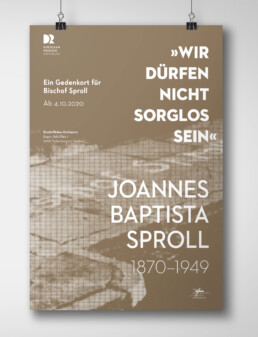
Ein Gedenkort für Bischof Sproll
Herkunft und Werdegang
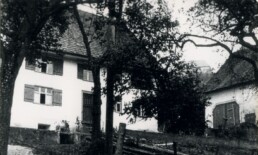
Joannes Baptista Sproll wurde am 2. Oktober 1870 in Schweinhausen bei Biberach geboren und wuchs in einfachen, bäuerlichen Verhältnissen auf. Sein Heimatpfarrer entdeckte seine Begabung und ermöglichte ihm den Besuch der Lateinschule. Nach dem Theologiestudium in Tübingen und der Priesterweihe wurde Sproll Dozent am Tübinger Wilhelmsstift, anschließend Subregens im Priesterseminar Rottenburg.
1909 ging Sproll als Pfarrer nach Kirchen, bevor ihn Bischof Paul Wilhelm Keppler drei Jahre später ins Domkapitel berief. Im Folgejahr wurde Sproll Generalvikar, 1916 Weihbischof. Ab 1912 saß er als Vertreter des Domkapitels im Stuttgarter Landtag, 1919 wurde er als Vertreter der Zentrumspartei in die Verfassunggebende Landesversammlung gewählt. Nach dem Tod von Bischof Keppler wählte das Domkapitel Sproll 1927 zu dessen Nachfolger. Es waren schwierige Zeiten: Die Weltwirtschaftskrise am Ende der 1920er Jahre führte zu einem Erstarken extremistischer Parteien, der Kommunisten und der Nationalsozialisten. Mit seiner Volksnähe und seinem offenen Charakter setzte Sproll angesichts dieser Tendenzen ganz auf die Bewahrung des tradierten Glaubens.
Gegner des Nationalsozialismus
Bereits 1931 verurteilte Bischof Sproll in einer Erklärung der südwestdeutschen Bischöfe den Nationalsozialismus als „mit der katholischen Lehre unvereinbar“. Nachdem Hitler 1933 auf legalem Weg Reichskanzler geworden war, erkannten die deutschen Bischöfe ihn als rechtmäßige Obrigkeit an.
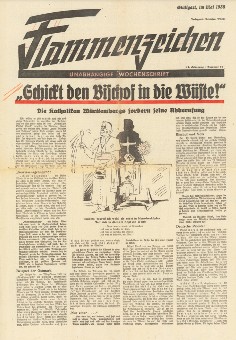
Ab Sommer 1934 exponierte sich Sproll als entschiedener Gegner des Nationalsozialismus. Er wandte sich öffentlich in Predigten gegen zentrale Inhalte der NS-Ideologie, gegen die Vergötzung von Rasse und Blut und deutsch-völkische Tendenzen. Die Auseinandersetzungen spitzten sich ab April 1938 dramatisch zu. Bischof Sproll setzte ein öffentliches Zeichen der Verweigerung, indem er sich nicht an der Wahl über den bereits vollzogenen Anschluss Österreichs an das Reich beteiligte, um nicht gleichzeitig Nationalsozialsten in den Reichstag wählen zu müssen. Die Nationalsozialisten reagierten mit einer Welle von inszenierten, angeblich aus spontanem Volkszorn entstandenen Demonstrationen und Ausschreitungen.
Verbannung und Exil
Die Versuche der Nationalsozialisten, Sproll zu einem „freiwilligen“ Amtsverzicht zu bewegen, scheiterten: Er ließ sich von den Ausschreitungen nicht einschüchtern. Zudem solidarisierten sich Teile der katholischen Bevölkerung mit dem Verfolgten, der als mutiger „Bekennerbischof“ wahrgenommen wurde. Schließlich wurde der Bischof aus seiner Diözese verbannt. Im September 1938 fand Sproll in der Benediktinerabtei St. Ottilien in der Diözese Augsburg Zuflucht. Aufgrund der Verschlechterung seines Gesundheitszustands wechselte er Anfang 1941 ins Heilbad Krumbad. Auch im Exil nahm Sproll – soweit möglich – sein Amt als Rottenburger Diözesanbischof wahr.
Er verfasste Hirtenbriefe und blieb in Kontakt mit dem Domkapitel. 1943 vollzog er von Krumbad aus die auf große Resonanz stoßende Weihe der Diözese an Maria.
Heimkehr und Tod
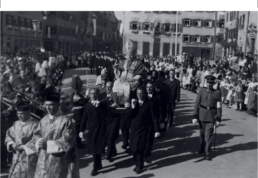
Erst mit dem Ende des Zweiten Weltkriegs und dem Zusammenbruch des NS-Regimes wurde der Weg frei für die Heimkehr des Bischofs. An der Rückkehrfeier am 14. Juni 1945 und an seinem 50. Priesterjubiläum nahmen Tausende Gläubige teil. Trotz seiner Krankheit besuchte Sproll in den folgenden Jahren viele Pfarreien in der ganzen Diözese. Das Bild des von Krankheit und Exil gezeichneten Bischofs, der wegen seiner Lähmung auf einem Stuhl durch die Menge getragen werden musste, prägte sich ins kollektive Gedächtnis ein.
Sproll betonte die Bereitschaft zur Versöhnung. Sein Wirken galt den in die Zukunft weisenden Aufgaben, dem Wiederaufbau nach den Zerstörungen, der christlichkaritativen Bewältigung der wirtschaftlichen und seelischen Not und der Integration der Heimatvertriebenen. Er starb am 4. März 1949.
Nachwirkung und Rezeption
Joannes Baptista Sproll hat sich als entschiedener, mutig die öffentliche Konfrontation suchender Gegner des Nationalsozialismus profiliert und exponiert. Gegen keinen anderen deutschen Bischof gingen die Nationalsozialisten derart massiv vor. Während andere dem Widerstand zuzurechnende Bischöfe wie der Münsteraner Bischof von Galen oder der Berliner Bischof von Preysing 1946 zu Kardinälen erhoben wurden, blieb Sproll diese Ehre verwehrt. Zwar wurde der Rottenburger Bischof nach seiner Rückkehr und in Nachrufen nach seinem Tod als „Bekennerbischof“ geehrt. Außerhalb der Diözese fanden seine mutige Haltung und sein Schicksal jedoch lange Zeit nur wenig Beachtung.
Die jüngere Forschung rückt Sproll wieder stärker in den Kontext des Widerstands gegen den Nationalsozialismus. 2011 leitete die Diözese Rottenburg ein Seligsprechungsverfahren für ihn ein.
Der Gedenkort
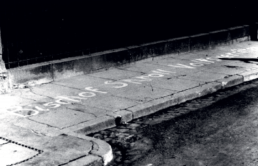
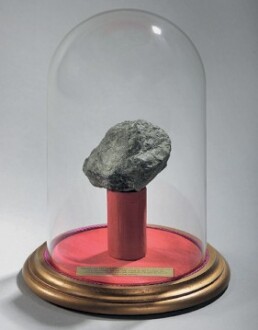
Der Gedenkort ist Teil des heutigen Bischöflichen Ordinariats Rottenburg. Historisch handelt es sich um den Eingang in das Bischöfliche Palais, den Wohnund Arbeitsort der Rottenburger Bischöfe. Im Frühjahr und Sommer 1938, nach der Wahlenthaltung Sprolls, belagerten nationalsozialistische Gruppierungen das Palais, warfen Steine durch die Fenster und schmierten Hetzparolen auf den Bürgersteig. Über Wochen gab es lautstarke Kundgebungen vor dem Palais, die die Vertreibung, Abberufung oder den Rücktritt des Bischofs forderten.
Am 23. Juli 1938 brachen Nationalsozialisten die Pforte auf und verwüsteten die Wohnung Sprolls. Das historische Portal und der Eingangsraum verweisen damit selbst auf die – auch unmittelbar physische – Verfolgung Sprolls.
Mediale Ausstellungspräsentation
Die Besucher erwartet eine moderne Erschließung der Lebensstationen Sprolls, aber auch des politischen Kontexts, in dem er sich bewegte. Eine mediale Präsentation sowie Objekte und Zitate veranschaulichen eindrücklich das Leben des Bischofs und sein Engagement gegen den Nationalsozialismus. Die präsentierten Treuebekenntnisse von Katholikinnen und Katholiken aus der Diözese bringen die Solidarität der Gläubigen zum Ausdruck und verdeutlichen, wie sehr die Geschichte Bischof Sprolls die Geschichte einer ganzen Diözese ist.
Die Ausstellung ist auch für Kinder, Jugendliche und Schulklassen anschaulich gestaltet. Der Gedenkort ist eine Zweigstelle des Diözesanmuseums Rottenburg.